How to choose the right wardrobe size for your room: a practical guide
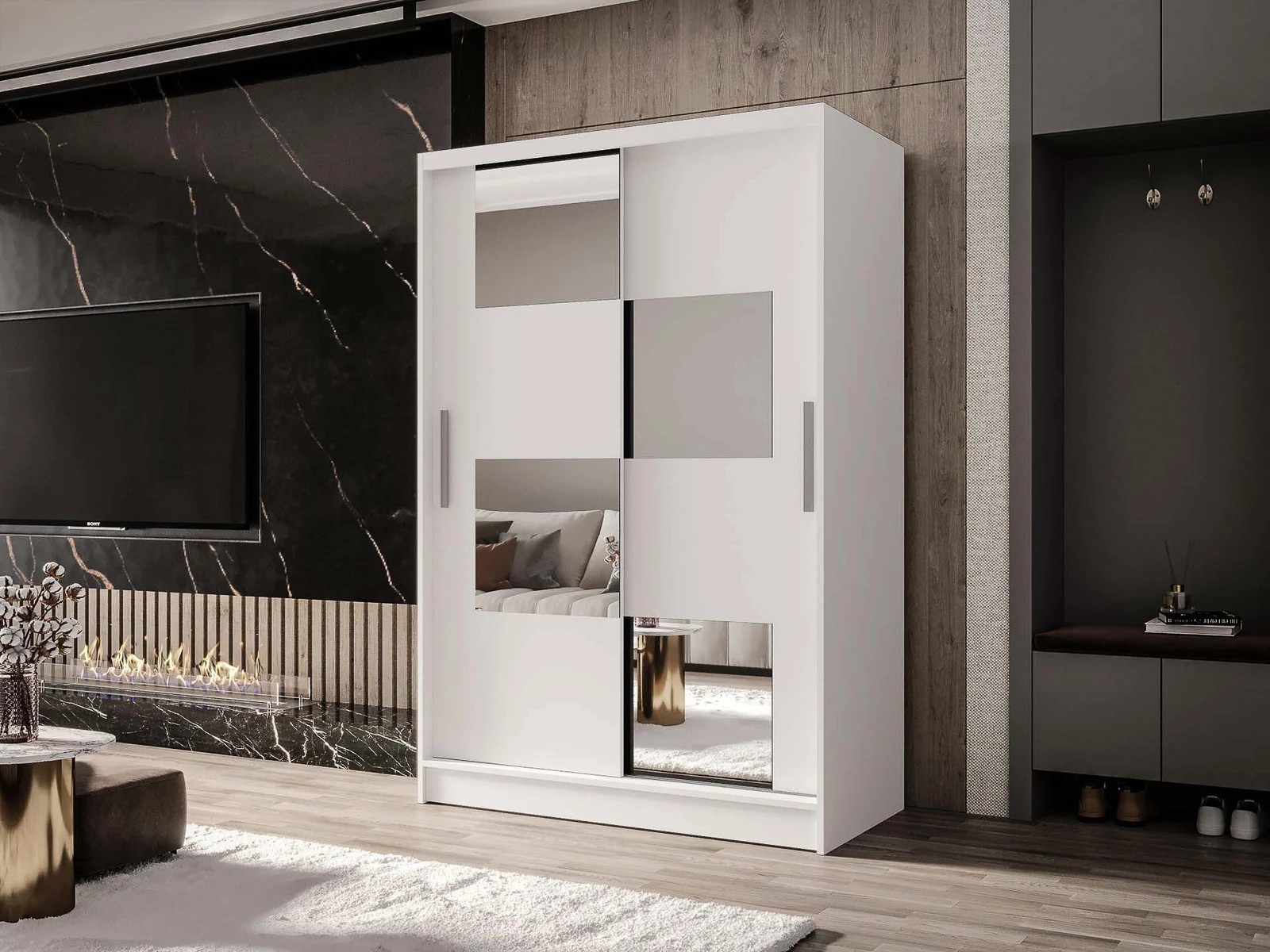
What wardrobe size will hold your belongings while keeping the room comfortable to use? Start by measuring the available space, then compare it with the furniture's interior layout. The width of the front does not tell you how many long garments, boxes or spare textiles will fit inside. Leave room to walk, open doors and reach everyday items.
Measure the wall, floor and ceiling height
Measure the available width near the floor and higher up, especially if the wardrobe will sit in an alcove. Check whether the walls and floor are level, and whether skirting boards reduce the usable space. Include sockets, switches, windowsills, sloping ceilings and radiator covers. These details reduce the space available for the finished furniture.
Check ceiling height and assembly requirements separately. Furniture is not always assembled in the same position in which it will stand; the instructions may require clearance above the cabinet or alongside it. When comparing wardrobes, use the overall dimensions rather than the width of one shelf or door panel. Include projecting tabletops and handles of adjacent furniture.
Decide how much wardrobe width you need
Sort your belongings into groups: short and long hanging clothes, folded garments, bedding, footwear and seasonal items. Measure the space they currently occupy and allow a sensible margin for the way you use them. If most of its interior consists of shelves while you mainly need hanging room for coats, some of that additional capacity may not be useful to you.
For a shared wardrobe, plan separate areas so both users can reach their most frequently worn clothes easily. Check which sections are covered when the sliding panels move. In the sliding wardrobes category, compare the interior drawing with the opening system. This helps establish whether accessing a basket or drawer will require moving the whole panel repeatedly.
Check depth for both clothing and circulation
Measure from the wall to the furthest point the wardrobe can occupy without causing problems. Include the bed, desk, bedroom door opening and standing room in front of the storage. Overall depth describes the whole construction, not the clear space inside it. Tracks, back panels and fronts occupy part of that dimension. Do not assume that the external measurement is also the amount of room available for a coat hanger or a storage box.
When choosing a wardrobe for a small room, avoid looking only for the shallowest model. Check that hanging clothes will fit using the arrangement designed by the manufacturer. Easy-opening furniture must still hold your belongings. Consider whether moving a desk or changing another piece of furniture would make a more useful wardrobe possible without making the rest of the room awkward to use.
Compare 150 cm, 180 cm and 200 cm wardrobes
A 150 cm wardrobe may be a useful starting point when the available wall is limited and your storage needs are clear. For one person, a well-divided interior can be more convenient than a larger cabinet with an unsuitable layout. Always record the exact dimensions of the model you choose. A size in the product name or an approximate category description is not a substitute for the figures shown in the technical drawing.
A 180 cm wardrobe offers more width for storage sections if the layout suits your belongings. A 200 cm wardrobe may help accommodate two people's clothes or additional household textiles, but needs a sufficiently long section of wall. Do not compare these options by shelf count alone. Shelf widths, the clear height between them and the length of hanging rails all influence how much usable storage each design provides.
Separate door count from overall size
A 2-door wardrobe does not have one fixed width. This description can cover furniture with different overall dimensions and interior arrangements. Similarly, a 3-door wardrobe needs its specification checked rather than being assumed suitable only for a large bedroom. Use door count to understand the front, then check measurements and access.
Check the outer sections and whether adjacent furniture can open freely. A small wardrobe may be sufficient if it works alongside a chest of drawers or another place for seasonal belongings. A large bedroom wardrobe should not remove the space needed to get comfortably out of bed. Storage capacity and ease of movement need to work together.
Plan delivery and assembly before ordering
Compare the longest and widest packages with doorways, the lift, staircases and corridor corners before confirming your choice. The finished wardrobe dimensions do not describe the delivery requirements, because its components are packed separately. Allow space to lay out the parts and handle the door panels during assembly. Follow the supplied instructions, including any requirements for securing the furniture to the wall. Check the whole delivery route.
Finally, mark the chosen footprint on the floor and rehearse your morning routine: walk from the bed, reach for clothing and open a basket or drawer. If the movements are comfortable and the interior suits your belongings, you have a useful basis for choosing. Choose using room measurements, storage arrangements and daily needs, not just the largest width that fits.