Wardrobe with or without a mirror: which suits a bedroom or hallway?
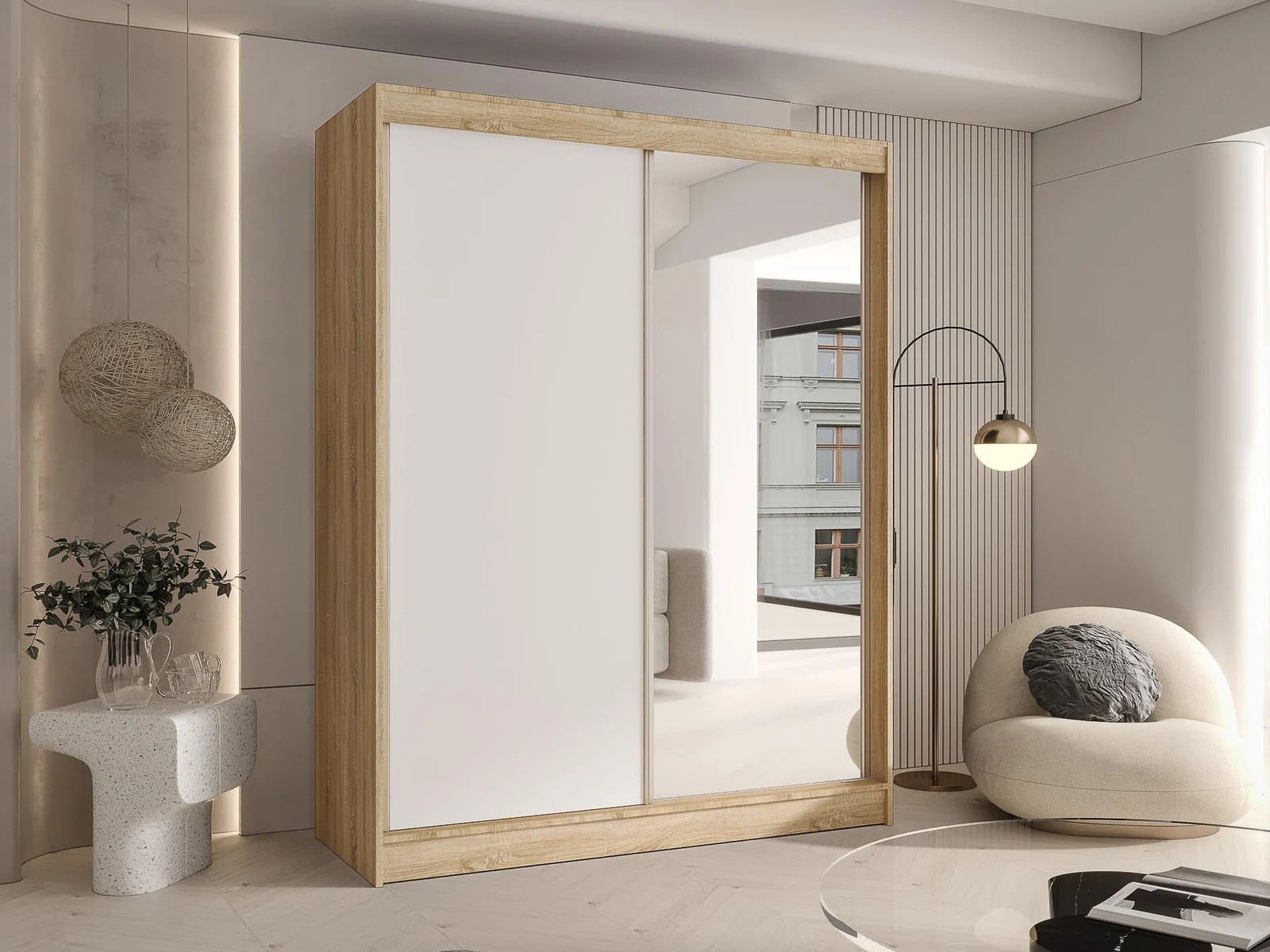
Wardrobe with or without a mirror? In a bedroom or hallway, a mirrored door can replace a separate item, but its usefulness depends on where the furniture stands. The front reflects the room, its light and people moving through it. Before deciding, look at the proposed position from several directions. Check the reflected view and the room for trying on clothes.
What does a mirrored wardrobe front offer?
A mirror lets you check your outfit without finding another section of wall for a separate full-length mirror. This is useful when wall space is limited. It can also reflect light and change how the wardrobe's size is perceived. It does not increase the floor area or make a narrow passage wider, so the furniture's actual dimensions remain the starting point for the decision.
When browsing wardrobes, compare the proportion of mirrored surface to the whole front. A mirror on one door creates a different impression from a reflective surface covering most of the wardrobe. A narrower vertical panel may be enough for checking clothes, while a larger reflection has more influence on the interior. Consider door divisions and handles alongside the rest of your furniture.
Check the reflection from the bed
In a bedroom, think about what you will see from the bed and from the doorway. Some people enjoy the reflection of a window and a light wall; others prefer a calm, uninterrupted front. Position a portable mirror near the proposed location, or photograph the room from that point, to understand which part of the interior will remain visible in the reflection throughout the day.
Repeat the check in the evening when bedside lights and lighting in adjacent rooms are switched on. A light from the hallway can be more noticeable after dark. A wardrobe with a large mirror is useful when its position suits the way you relax and sleep. If the reflected light feels distracting, consider a smaller mirrored panel or a separate mirror outside the direct view from your pillow.
Leave standing room in the hallway
A hallway mirror is convenient before leaving home, especially when coats and shoes are stored nearby. Allow space for the wardrobe and for someone standing in front of it. That person should not prevent the entrance door from opening or force others to walk around them through an area used for wet footwear. Test the arrangement while carrying a bag or wearing a backpack.
For a narrow hallway, consider sliding wardrobes, whose doors move along the front. The absence of swinging panels does not remove the need for standing room or easy access to clothing. Nor can a mirror compensate for a wardrobe that is too deep for the passage. Establish a comfortable route through the space first. Then choose the size of the mirrored area.
When might a wardrobe without a mirror suit you?
A wardrobe without a mirror can work well when you already have a conveniently positioned wall mirror or want a quiet backdrop for the room. A front similar in colour to the wall can create a relatively continuous surface, while a wood-effect finish introduces visible grain and variation. A solid front will not reflect open shelves or hanging clothes opposite it.
Consider cleaning access as well. Fingerprints show on a mirror, so look at the handles and check whether you can comfortably reach the entire surface. How often it needs cleaning depends on its users and position, not just the type of finish. When comparing wardrobes with mirrors, read the manufacturer's care instructions and choose cleaning products suitable for the actual surface.
Evaluate the doors and interior separately
A sliding wardrobe with a mirror combines two independent choices: a reflective finish and a sliding opening system. Assess the mechanism, then the appearance, and then the shelves and hanging rails inside. An attractive front cannot replace the hanging length needed for long coats if those are the items you store most. Access also depends on the opening left by the sliding panels and the position of the interior compartments.
Read the instructions for the specific product, including door adjustment and any wall-fixing requirements. Before delivery, check package dimensions and the route into the room. Plan where to unpack and assemble the larger panels.
Choose the front around your daily needs
Ask three questions: do you need a mirror in this exact location, do you like the reflected view, and can you comfortably use the wardrobe? A mirrored front can then combine storage with checking your outfit. If the reflection is distracting or you already have a suitable mirror, a solid front can be an equally practical choice.
Visit Cornero to explore furniture for the rest of the room. Look beyond the impression of a larger room: a suitable footprint, useful storage and clear space in front make everyday use more comfortable.