L-shaped or U-shaped corner sofa: which shape suits your living room?
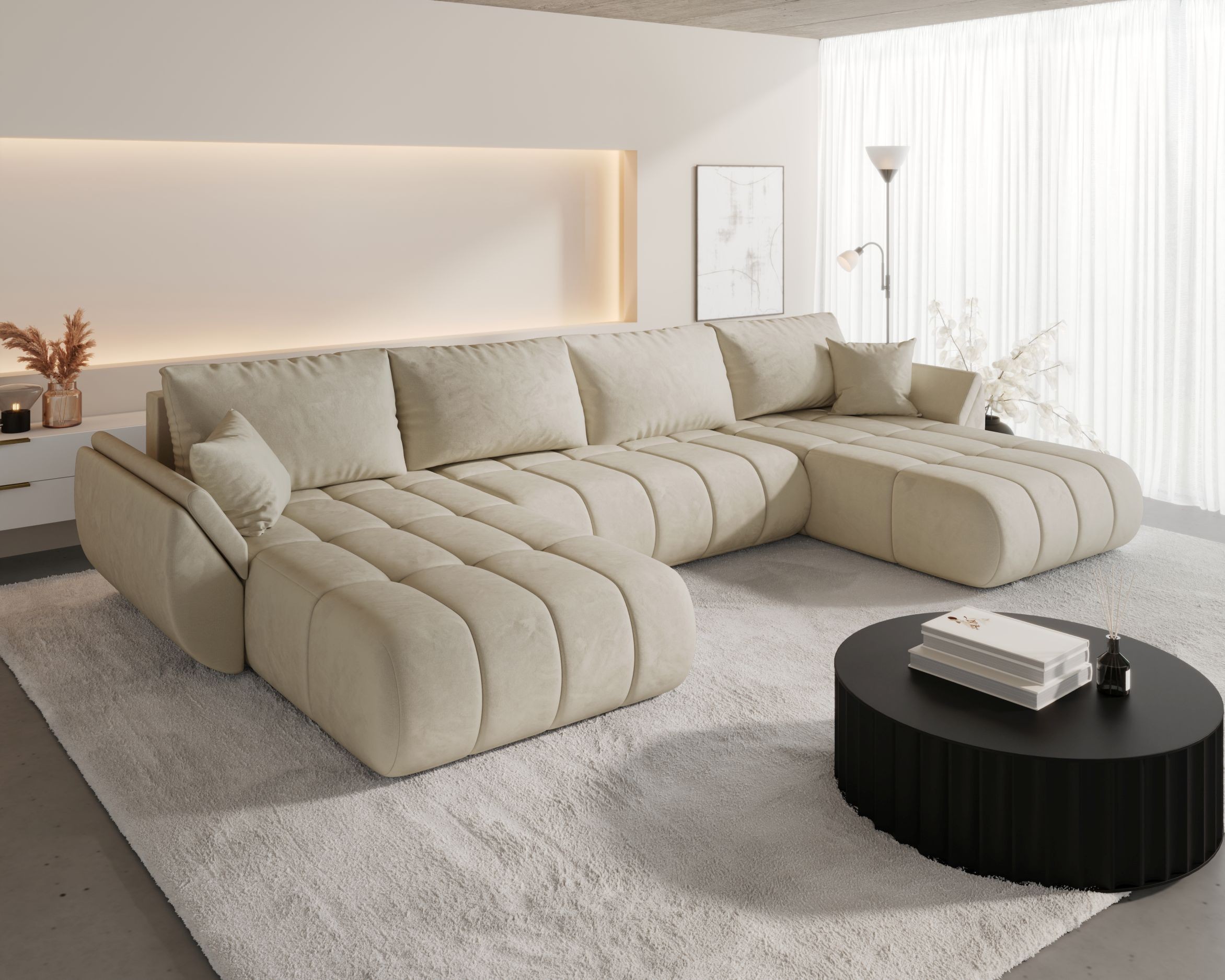
L-shaped or U-shaped corner sofa? The answer depends on how you use your living room and how much space remains around the furniture. One chaise can leave more room for a coffee table and a clear route. Two extended sections create a more enclosed seating area, but their complete footprint needs careful checking. Start with everyday seating, conversations and any plans to use the sleeping function.
Understand the difference between the two shapes
An L-shaped corner sofa has two sections meeting at an angle, often a straight seating section and an extended chaise. It can sit in a corner, stand against one wall or divide the seating area from the rest of the room. The lengths of its sides and the chosen orientation determine how it works in that position. The shape alone does not establish whether a sofa is compact.
A U-shaped corner sofa surrounds a central area on three sides. Many models have two chaises, although the photographs and dimension drawing should always confirm the actual construction. This arrangement offers the possibility of stretching out at both ends. When comparing living room corner sofas, check the depth of each end and the clear space between them as well as the overall width.
When does an L-shaped sofa work better?
Consider an L-shaped layout when the room contains several important routes: the entrance, the connection to the kitchen and the balcony doors. A single extended section provides more freedom to keep one side of the seating area open. It can also make it easier to add an armchair, footstool or small side table.
A narrow room may accommodate furniture along one wall more comfortably than a seating area enclosed on both sides of the coffee table. However, floor area alone does not decide the answer. A larger room can have a more difficult door arrangement than a smaller, regular space. When browsing L-shaped corner sofas, compare left-hand and right-hand versions, then mark the preferred footprint on the floor.
When should you consider a U-shaped corner sofa?
In a spacious room, a U-shaped layout can establish a clear place for spending time together. Two chaises may be useful when two people want to stretch out their legs at the same time. The central section provides space for sitting close together during conversation. The usable seat widths, arms and the way people prefer to sit determine the practical capacity.
This layout can also separate relaxation from a dining area. If the sofa will stand away from the wall, check the back upholstery and the finish of every visible side. Look at U-shaped corner sofas from several viewpoints. A large sofa should work visually from the room entrance as well as from the television. A route behind its back must also leave enough room for people to pull out their dining chairs and move around the table.
Test the space around your coffee table
Mark out both possible sofa footprints with removable floor tape. Add the coffee table, television unit and any armchairs that will remain in the room. Then check how people would reach each seat. In a U-shaped arrangement, the entrance to the central space can be narrower than it appears in a wide-angle product photograph. Allow for handles and the opening of nearby cupboards.
An oversized coffee table can make even a well-chosen sofa awkward to use. A smaller tabletop or a set of movable tables may suit an enclosed seating area, but check that drinks remain within comfortable reach of the seats you actually use. Walk between the furniture, sit down and stand up. Test the arrangement yourself rather than relying on one universal gap.
Compare sleeping functions and bedding storage
If guests will sleep on the sofa, compare the opening method of each specific model. A larger sofa does not automatically provide a more useful sleeping area. The actual sleeping dimensions, surface joins and access to the unfolded section matter. The surface available for lying down and the complete footprint of the open furniture are different measurements.
Decide where the coffee table will go overnight and check how the bedding compartments open. Storage beneath a seat is useful only if the relevant section can be lifted comfortably in its intended position. Do not assume that a U-shaped model has two compartments while an L-shaped model has one. Equipment depends on the particular construction. Confirm it in the description and instructions rather than drawing conclusions from a photograph of the closed sofa.
Keep the room visually balanced
Look beyond the outline on the floor. A high back, broad arms and substantial side panels can make the sofa appear larger. Upholstery colour and its contrast with the wall also affect the visual impression. A light fabric will not, however, stop an oversized piece of furniture from blocking a doorway. Resolve dimensions and circulation first, then compare colours, leg styles and the other details that shape the finished room.
If the choice still feels unclear, list your household's three most important needs. They might be stretching out comfortably, keeping the balcony accessible or preparing a bed regularly. Compare finishes once the layout meets those needs. The Cornero furniture store can help you coordinate the surrounding furniture. Choose the shape that works with your daily routine and visiting guests.